
Thousands of people fleeing conflict in Sudan and seeking safety in Chad’s eastern border provinces may lose access to vital humanitarian and medical aid when the impending rainy season begins, the international medical humanitarian organization, Doctors Without Borders/Médecins Sans Frontières (MSF) said today. Humanitarian aid and funding must be urgently increased to support everyone in the eastern border regions, including refugees from Sudan and local communities, who will be cut off from all assistance during the raining season.
“More than 100,000 people have already crossed the border into Chad since the start of the fighting in Sudan and we fear that with the coming rainfall, people in this border area will be trapped and forgotten, with no access to critical lifesaving services or information on where to access them,” said Audrey van der Schoot, MSF head of mission in Chad. “In an already neglected and underfunded context like Chad, the continuous arrivals from Sudan put a strain on the country’s already limited and overstretched resources and could exacerbate the existing humanitarian needs of both Sudanese refugees and the host community."
Nearly 30,000 refugees and returnees (including Chadians who were residing in Sudan) have arrived in eastern Chad’s Sila province bordering Sudan, where the rainy season floods roads and dry riverbeds—known as wadis. This will completely isolate refugees and host communities, cutting them off from all services and assistance.
In an area with poor access to clean water and sanitation services, the rainy season also brings an increased risks of waterborne and infectious diseases. The situation has triggered an emergency response, and humanitarian actors are trying to provide aid and relocate people away from the border areas before the rains hit, but these efforts are not enough.
June 06 01:32 PM
An MSF logistician's journey from Sudan to Chad
Moussa Ibrahim reports back after crossing the border into Adré, Chad to assess potential logistical support for West Darfur.
Read More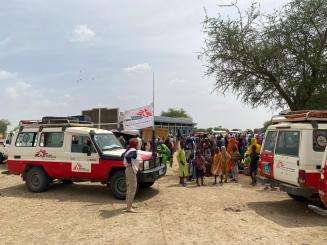
“Many refugees want to move away from the border area, but there is not enough space for them to relocate,” said van der Schoot. “At the same time, there are others who wish to remain where they are, in addition to continuing arrivals from Sudan. People may be left to make unimaginable choices: To stay without any assistance or to return to Sudan where they would be exposed to more violence and physical and psychological harm. The ongoing humanitarian [aid] should prioritize the needs of people [who] will eventually become stranded at the border.”
Refugees and returnees in Sila region are receiving limited and slow humanitarian assistance. The lack of shelter, water, and food forced many refugees to ask other refugee families or people from the host community to share their limited resources.
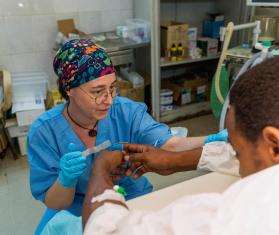
In response, MSF launched an emergency project in cooperation with local health authorities to provide medical and preventive care to Sudanese refugees, Chadian returnees, and the host community at Andressa and Mogororo refugee sites. MSF’s mobile clinics screen and treat acute malnutrition in children, provide sexual and reproductive health care, and refer people needing a higher level of care to the MSF-supported Deguessa health center or Koukou hospital.
In the first three weeks, MSF’s medical teams treated 1,460 patients, most of them children suffering from malnutrition, respiratory infections, acute watery diarrhea, or malaria—all illnesses stemming from precarious living conditions. We also provided antenatal and postnatal care to 333 women.
June 02 08:36 AM
Chad: MSF treats war-wounded people fleeing conflict in Sudan
At a hospital in Adré, most of the injuries MSF teams are treating are gunshot wounds inflicted in clashes and attacks in Masterei, a Sudanese border town.
Read More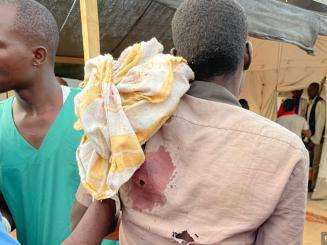
MSF mobile clinic teams in Sila have heard devastating stories from refugees who fled from Foro Baranga and other villages to the south of West Darfur, Sudan, which is only a few kilometers from Chad’s border. Most had arrived on foot. Survivors were in shock after witnessing or experiencing extreme violence, including sexual and gender-based violence, torture, kidnapping, forced recruitment by armed groups, looting, blackmail, and property destruction. They also reported being stopped by militants at the border demanding payment to enter Chad and threatening to rob or kill them.
MSF teams have also provided care to more than 70 injured Sudanese people in its health facility in Chad’s Ouaddai’s Adre region. Most of the wounded arrived with severe gunshot wounds sustained during clashes in West Darfur. Many others were left behind, unable to travel to Chad or receive medical treatment.
The local communities in Chad’s eastern border regions are also impacted by the conflict in Sudan. People living here are unable to seek health care during the rainy season or access markets in Sudan—a significant source of their livelihoods. This has caused prices of food and commodities to soar in the area, which already experiences high rates of malnutrition and where access to health care is limited. The conflict in Sudan adds another layer to the challenges they face, including extreme weather changes and recurrent outbreaks of preventable and treatable diseases.
“We are facing a crisis on top of another crisis,” said van der Schoot. “An urgent scale-up of the humanitarian programming and funding for refugees from Sudan is needed, but the needs of the host community and other refugees in eastern Chad should be prioritized equally in this humanitarian response.”