Activities in 2025
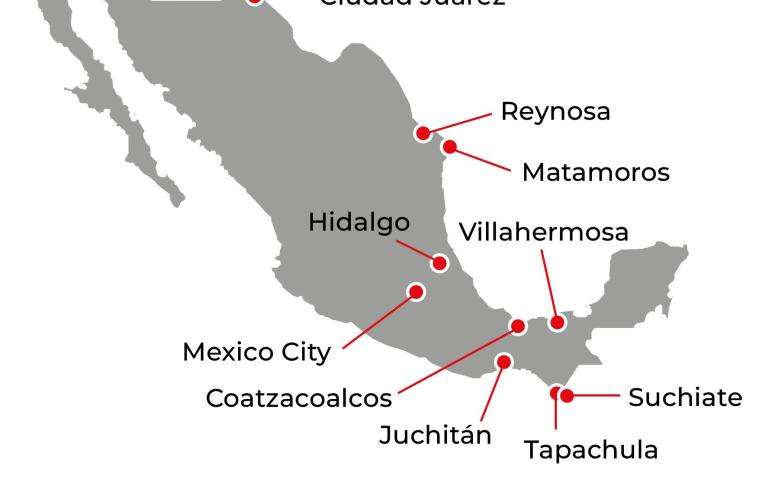
To adapt to changing policies, in 2025 we closed our projects in Coatzacoalcos, Reynosa, and Matamoros, where for more than seven years we assisted people in transit or waiting at the border. Unable to continue their journeys, many have remained in Mexico, where they face legal obstacles, difficulty accessing health care, and uncertainty about their future. Consequently, our activities have shifted from delivering emergency aid to addressing the chronic medical and psychological needs of people left in legal and social limbo. In this changing landscape, Mexico City and other urban centers have become places of reception and long‑term stay rather than points of transit. In response, MSF continued working in the capital and Tapachula throughout 2025 to support people who are no longer on the move, but are trying to rebuild their lives. In the northern border city of Ciudad Juárez, we reoriented our activities towards victims of violence.
Our Comprehensive Care Center in Mexico City remains central to our work in the country, providing multidisciplinary care to victims and survivors of extreme violence, torture, and sexual assault. This care comprises medical, psychiatric, and psychological support as well as social work and physiotherapy. Across all our projects, including our emergency response to Hurricane Priscilla in Hidalgo state, we have broadened our approach to include not only migrants and internally displaced people, but also local communities with limited access to health care due to socioeconomic and geographic barriers. We have adapted our activities at fixed facilities and mobile clinics in order to reach dispersed and often invisible communities. As people endure prolonged displacement and trauma, mental health care has become increasingly important.