Fighting along Yemen’s western coast has displaced more than 128,000 people this month alone. After reaching safety, many of those displaced find themselves unable to access health care due to the cost of medicines and transportation.
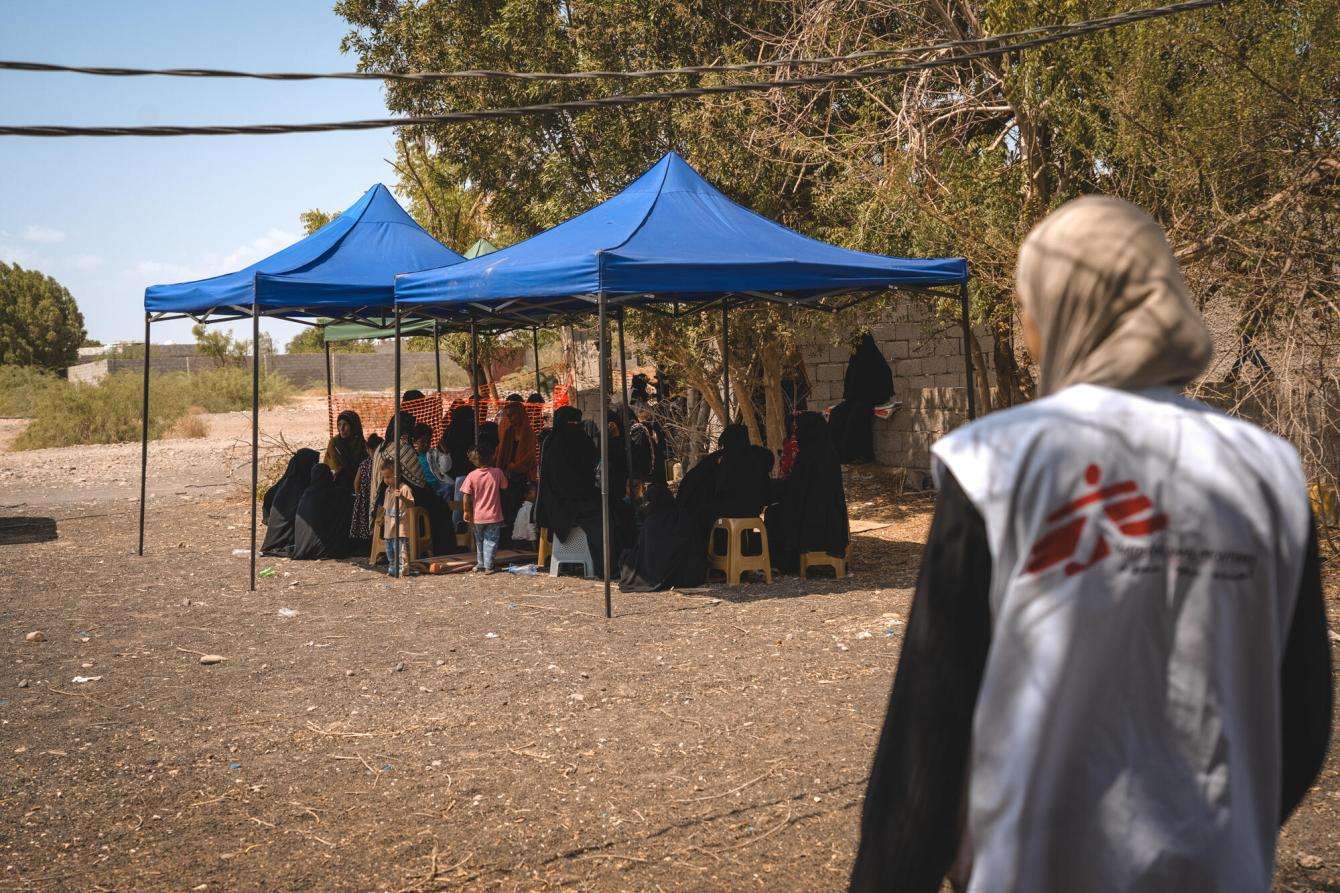
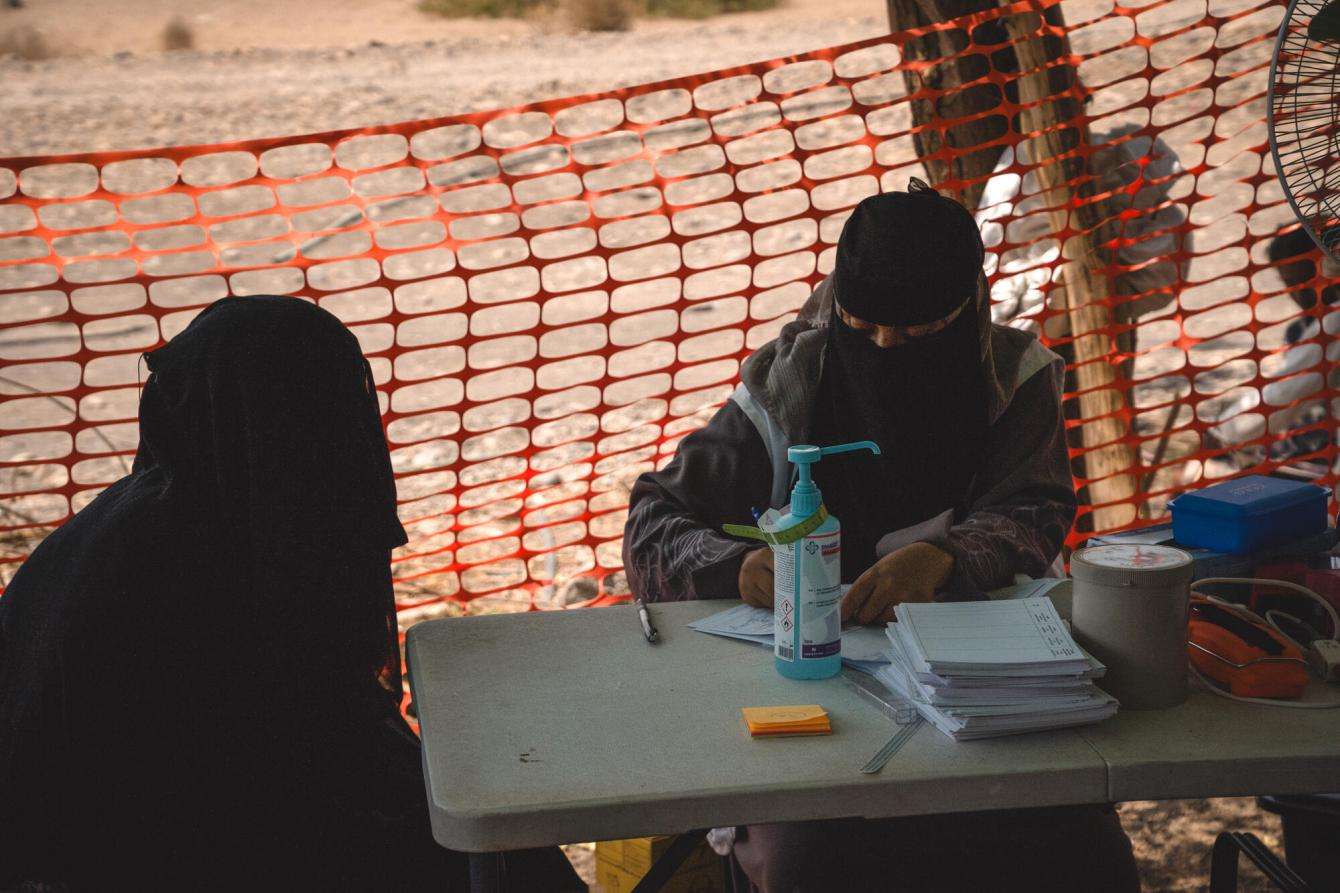
In response, Doctors Without Borders/Médecins Sans Frontières (MSF) mobile teams are providing medical consultations, rapid tests, vaccinations, malnutrition screening, sexual and reproductive health care, and referrals in four camps hosting displaced people in Aden and Lahj. Our teams are seeing immediate and significant medical needs among both newly displaced and longer-term displaced communities, such as malnutrition, fever, and untreated infections and diseases. With ongoing displacement and insecurity in the country, MSF continues to assess the needs and is prepared to scale up the response if they increase.

People are leaving everything behind
“We didn’t know what was happening at first — then we realized there was fighting,” says Anwar Abdullah, a father of six whose family lived in Hodeidah governorate until fighting broke out on September 10. “I took my children and my wife and we left everything behind.” The family fled to Aden.
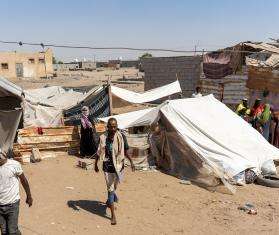
Anwar’s family now lives in a temporary shelter in Koud Othmani camp in Aden’s Sheikh Othman district, where they cook over firewood. They are among thousands of people who have arrived in the city in the latest wave of displacement.
“We have been through a very difficult time, and now we are living in extremely difficult conditions,” Anwar says.
Distance and cost make health care harder to reach
The four camps MSF visits were already hosting around 6,500 displaced people before the new arrivals came, and at some sites, the population has since doubled. The camps are located 2 to 4 miles away from health facilities. With the fuel shortage and higher prices, medicines and transportation are often beyond what families can afford.
“We are seeing sick children, pregnant women who don’t have access to health care, people with wounds, and older people who need medical services but have difficulty reaching them,” says Sara Ghanim, MSF mobile health activity manager in Aden.
What’s happening in Yemen?
In early September, Ansar Allah forces started a rapid advance on the western coast of Yemen. Here’s what to know:
- Displacement: 128,000 people have been newly displaced since the September escalation, adding to the more than 5.2 million people already displaced across Yemen.
- Health care: Displacement has put further pressure on the health system, as health workers flee cities like Mokha.
- MSF response: In Mokha, our teams provide maternal and pediatric care, treatment for cholera, and other services at Mokha General Hospital; in Aden, we run mobile clinics in four camps.
MSF teams are treating patients with wounds and injuries, malnutrition, fever, diarrhea, and untreated infectious and non-communicable diseases. They are seeing pregnant women who have received no prenatal care, children with severe malnutrition, and children who are not fully vaccinated.
During one assessment, our teams met a family that had arrived from Mokha after traveling for several days. An elderly person with an infected foot wound and a severely malnourished 2-year-old child were immediately referred to different hospitals. The child has since been discharged from a malnutrition treatment center and returned to the family, while the older family member remains in hospital for further treatment.
Bringing health care closer to displaced people
During the first week of MSF’s mobile response, our teams saw 427 patients across four sites in Dar Saad and Sheikh Othman districts in Aden and Tuban district in Lahj. Most patients were women and children, and around 40 percent had been newly displaced by the latest escalation in Taiz and along the west coast.
“We are seeing huge pressure on a health system that is already collapsing and has faced many challenges for years,” says Ghanim.
MSF mobile teams provide medical consultations, rapid testing, routine vaccinations, malnutrition screening, pregnancy testing and family planning, referrals, and testing for blood sugar, malaria, and dengue. Alongside our mobile response, MSF has been supporting primary health care at Al Farsha in rural Lahj and Al Basateen in Aden since April. Both facilities serve communities hosting displaced people.