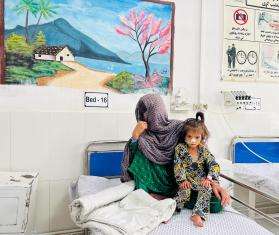
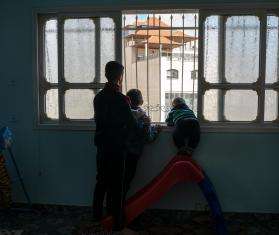
Doctors Without Borders/Médecins Sans Frontières (MSF) continues to treat scores of patients suffering from life-changing injuries, chronic pain, and psychological trauma sustained while attempting to access food assistance from US-backed Gaza Humanitarian Foundation (GHF) sites. This militarized food distribution scheme launched one year ago but only ran for six months before being forced to stop after significant controversy and criticism.
The GHF, which replaced a 400-site UN-coordinated aid distribution system, was run by Israel with financial support from the United States and other allies. GHF sites became operational on May 26, 2025, and were “secured” by private American armed contractors, with Israeli forces maintaining control over the wider perimeter.
US-backed aid distribution points are sites of orchestrated killing
Read moreViolence occurring at and related to GHF’s four distribution points led to deaths and injuries for thousands of Palestinians who were desperately seeking food during Israel’s months-long total blockade.
The legacy of the GHF is widespread violence against hungry people
“As MSF has documented with medical evidence, people who were seeking food in desperate and siege-like conditions suffered horrendous levels of targeted and indiscriminate violence,” said Joan Tubau, MSF head of mission for Palestine.
“Children were shot in the chest while reaching for food, people were crushed or suffocated in stampedes, and entire crowds were gunned down at distribution points. Today, many GHF-related patients are entirely dependent on charity and community kitchens due to their mobility issues and lack of ability to work and provide for their families.”
Between June and October 2025, MSF teams recorded at least 32 deaths and treated 1,885 patients for injuries linked to the GHF sites at MSF’s Al-Attar and Al-Mawasi primary health care centers in Khan Younis.
Neama Awad
“Even if it meant death, I had to go bring food”
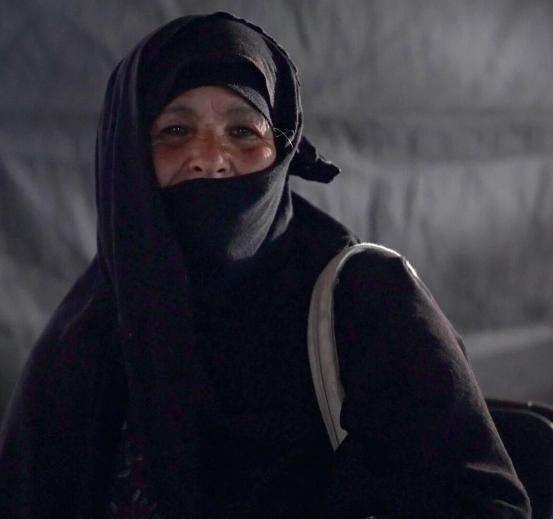
I am from Miraj, originally from Rafah. Everything was destroyed. The occupation came near us. They were shooting at our children and here too we are displaced. I only wish to return home. Honestly, my situation is very bad. I am sick, and my husband is sick.
I went looking for a loaf of bread. I went walking as I don’t even have one shekel for transportation. One day people came and said, ‘Go to the aid point in Al-Tina to get food.’ I said I would go. I wanted to bring food for my children. There was no food, nothing. We became skin and bones. I went to the aid distribution because we had no support at home — no flour, no food, no aid reaching us, not even a loaf of bread.
Patients recount horrific scenes
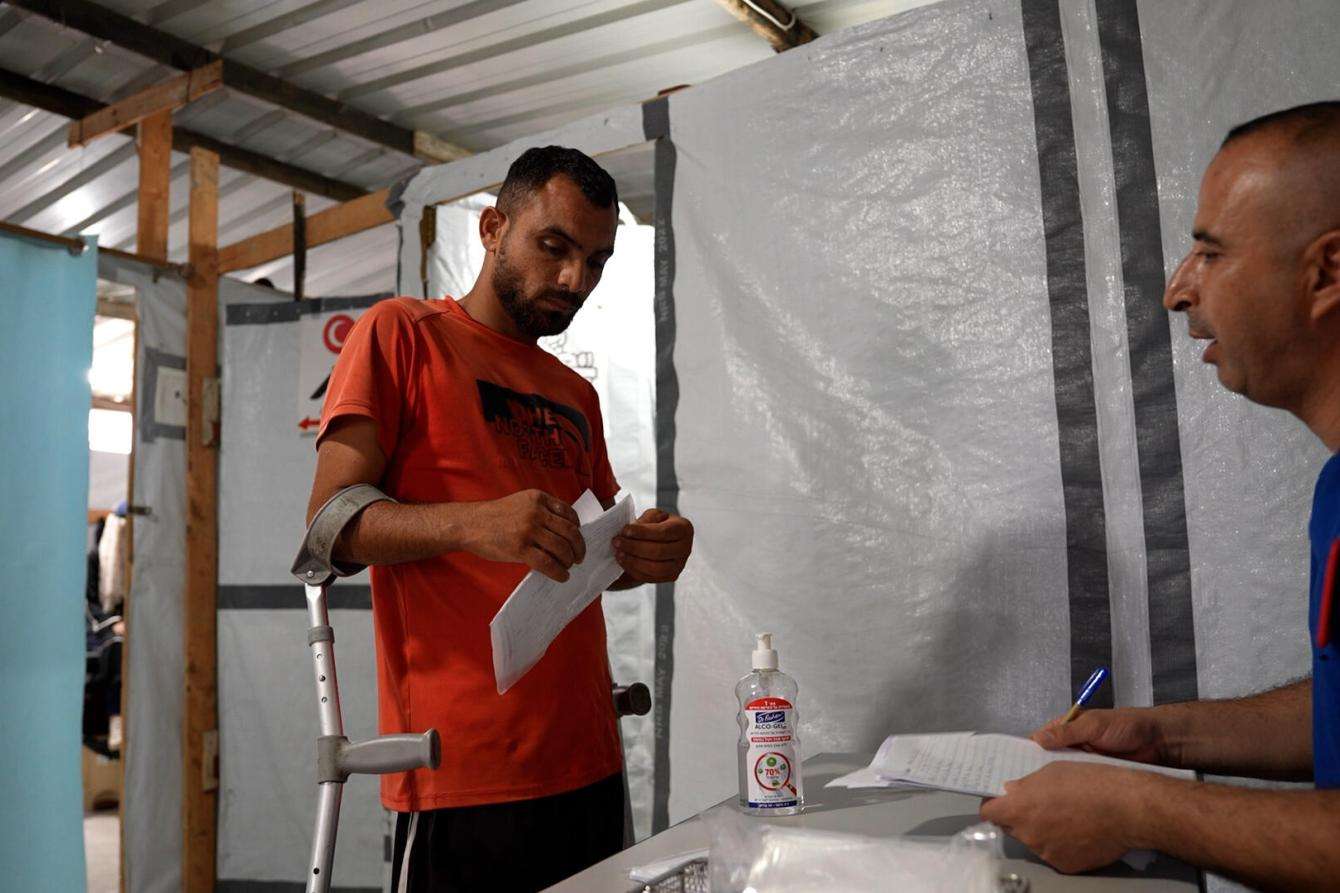
“My friend was executed in front of my eyes,” said Karim, a former barber who suffered life-changing injuries permanently damaging a nerve in his leg. “It still haunts me. Both of us were caught and handcuffed [by Israeli soldiers] behind our backs. A drone hovered above me, and four men were asked to take me away.”
Mustafa, a taxi driver from Rafah, developed a heel infection that caused rotting after a gunshot wound broke two of his bones as he was trying to access food. His 17-year-old nephew was shot in the head and killed by a sniper.
“[It] was so humiliating,” Mustapha said. “Thousands of people would run towards [the food], then the IDF would shoot on us from fixed points. Two thirds of the injured people in Gaza I know were cases from GHF.”
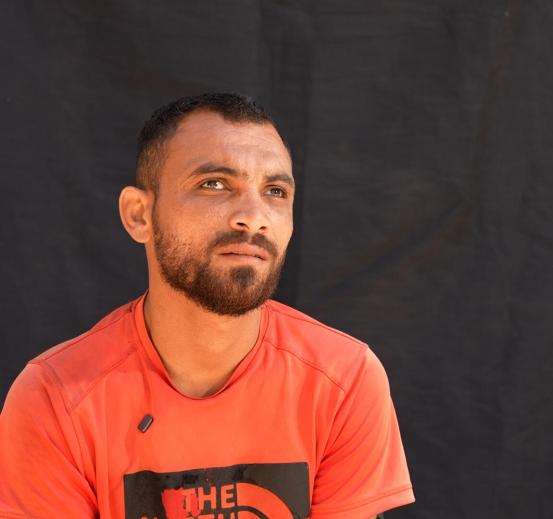
Saad Hussein, MSF patient
"Hunger: That is what made us go"
I am from southern Rafah. Neither our grandfather nor the many displaced people before us lived through this. So many homes were destroyed. Everyone was displaced. We were living in the Iqlimi area, but with the famine and everything that was happening, we were forced to leave. We have children, pregnant women, and breastfeeding mothers. We had to take whatever we could because nothing was available. We were forced to go to the American aid distribution points.
We had no clean food, no clean clothes, no clean bathrooms. Nothing was clean. We did not eat breakfast, lunch, or dinner. We would bring lentils from the community kitchen and survive on them until the next day. My mother, my brothers, my brother’s six orphaned children, my brother’s wife, me, my mother, and my father. God is with us and with them.
The opposite of humanitarian work
The GHF also played a key role in the malnutrition crisis manufactured by Israel. The drastic reduction of food and aid distribution points compounded by the total siege, intensified violence, mass displacement, and destruction of health facilities had a direct role in the famine declared in mid-2025, with devastating consequences on vulnerable groups such as pregnant women, newborns, and children.
“Nothing about GHF was a humanitarian solution,” Tubau said. “One year on, the magnitude of the harm inflicted on people at GHF distribution points without any accountability requires an independent investigation. Israel has an obligation to ensure unhindered humanitarian access and condemns aid models, including the GHF, that fail to alleviate suffering.”
This militarized system of aid delivery resulted in significant harm and suffering and should never be replicated. Israel, the US, and all actors of influence to ensure that aid is non-militarized, accessible, and built on independence, impartiality, neutrality, and humanity. Civilians must be able to safely reach humanitarian assistance — based on vulnerability and need — wherever they choose to reside, and at scale.
*Names of patients have been changed for their safety.
Get news from Gaza and around the world
News Nov 20, 2026
Drug-resistant infections are an increasing threat to people in confli...
Read more