Today, Lebanon is facing a severe and rapidly worsening humanitarian crisis as Israeli airstrikes and incursions continue. The growing crisis in Lebanon is part of the wider conflict in the Middle East, which escalated on February 28, when the United States and Israel launched a major military assault on Iran.

Lebanon 2026 © Emin Ozmen/Magnum Photos
Lebanon
Providing medical and humanitarian assistance to migrants, refugees, and people internally displaced by conflict.
Update
Living with the psychological toll of war in southern Lebanon
October 6, 2026 — For communities in southern Lebanon, the announcement of yet another so-called ceasefire in April has done little to quell their fear: Daily Israeli attacks continue to endanger people and weigh heavily on their mental health. Those who remain in areas affected by Israeli bombardment often have little space to process what they are experiencing emotionally, while the threat itself continues.Doctors Without Borders/Médecins Sans Frontières (MSF) is providing a free and confidential mental health helpline providing remote psychological support to people experiencing dist ress caused by the war in Lebanon.

Our work in Lebanon
Doctors Without Borders/Médecins Sans Frontières (MSF) has been active across Lebanon since 1976, running clinics and providing pediatric and reproductive health care, mental health services, and treatment for non-communicable diseases. In March 2026, we launched a nationwide emergency response amid a renewed bombing campaign by Israeli forces and widespread forced displacement.
What's happening in Lebanon?
Conflict in Lebanon has flared in recent years, while an ongoing economic crisis has strained public services. People struggle to access affordable medical care. Lebanon also hosts large numbers of refugees and migrant workers.
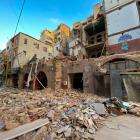
In March 2026, a renewed Israeli military campaign began, with heavy bombardment throughout the country — particularly the south — as well as blanket displacement orders. More than 1 million people have been forced from their homes, and many remain unable to return amid ongoing Israeli military operations.
How we're helping in Lebanon
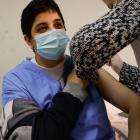
Our teams in Lebanon support communities facing barriers to health care, including refugees, displaced families, and migrant workers. In March 2026, as the conflict with Israel escalated, MSF launched an emergency response. In the first days of the escalation, our teams swiftly began distributing essential relief items like blankets, mattresses, hygiene kits, and drinking water to displaced people. We also scaled up our response in several collective shelters, towns, and cities hosting displaced people, and continue to run mobile clinics to reach people cut off from care.
How we're helping
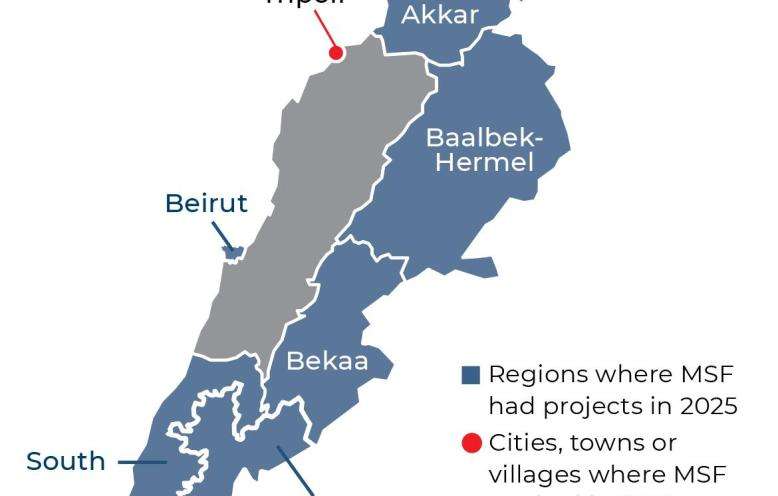
225,400
Outpatient consultations
22,800
Diabetes consultations
21,500
Consultations for high blood pressure
11,800
Individual mental health consultations
*Data from MSF International Activity Report 2025
More news and stories
Learn about MSF’s journalistic roots and our commitment to bear witness and speak out about the plight of the people we treat.


Learn about MSF’s journalistic roots and our commitment to bear witness and speak out about the plight of the people we treat.
How you can help
Not everyone can treat patients in the field. But everyone can do something.
Some humanitarian crises make the headlines—others don’t. Unrestricted support from our donors allows us to mobilize quickly and efficiently to provide lifesaving medical care to the people who need it most, whether those needs are in the spotlight or not. And your donation is 100 percent tax-deductible.