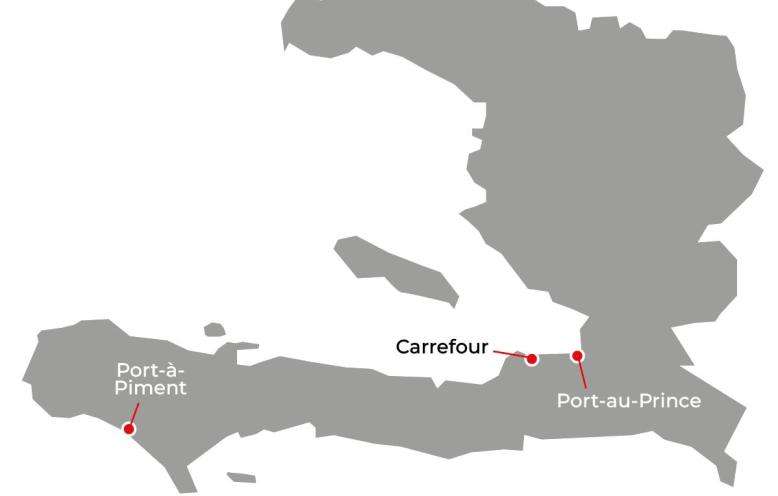


The Viv Ansanm (“living together”) alliance, composed of armed groups that had previously fought each other, has gained control of approximately 85 percent of the capital, Port-au-Prince. In these neighborhoods, thousands of residents are completely cut off from basic services such as electricity, water, education, transport, and health care, and face the constant danger of being caught in the crossfire with no means of escape.
There was a marked escalation in violence in 2025 as private military contractors were deployed in Port-au-Prince, with weapons including explosive drones. After a drone attack in the Cité Soleil neighborhood on September 20, a large number of wounded patients arrived at the MSF-supported Cité Soleil and Isaïe Jeanty Maternity hospitals, the majority children and women. The UN Security Council has decided to progressively send a 5,550-person “Gang Suppression Force” to Haiti, replacing the previous Kenyan-led Multinational Support Mission.
Operational challenges amid conflict
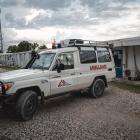
MSF has continued to work under volatile conditions in Haiti, despite repeated security threats and incidents that have disrupted our operations. On March 15, 2025, we were forced to suspend activities at Carrefour and Turgeau medical centers due to an upsurge in fighting in their immediate vicinity. While our teams were evacuating Turgeau in an MSF convoy, our four clearly identified vehicles were shot at — at least 15 times — by a man wearing a police uniform. Our colleagues sustained minor injuries.
Following the incident, we decided to suspend all patient referrals conducted via MSF ambulances. Later in the year, due to the lack of sustainable solutions to properly secure our Turgeau medical center, MSF had to make the devastating decision to permanently close the facility, reducing health care options even further for communities.