Developing story
Ebola disease outbreak 2026: How MSF is responding
As Ebola disease makes a resurgence in DR Congo, MSF staff are treating patients, setting up treatment centers and isolation units, and delivering supplies.

Developing story
As Ebola disease makes a resurgence in DR Congo, MSF staff are treating patients, setting up treatment centers and isolation units, and delivering supplies.
October 7, 2026 — Doctors Without Borders/Médecins Sans Frontières (MSF) is working in close coordination with the Kenyan Ministry of Health following its announcement of the first person with confirmed Ebola disease in the country. In June, MSF opened an Ebola simulation and training center near Nairobi to support preparedness efforts among MSF staff, Ministry of Health personnel, local health care workers, and partner organizations.
Democratic Republic of Congo (DRC) is facing its largest and fastest-spreading Ebola outbreak ever recorded, with more than 4,000 people reported dead since May. The World Health Organization has declared the outbreak a public health emergency of international concern.
Currently, more than 2,800 Doctors Without Borders/Médecins Sans Frontières (MSF) staff are on the ground in DRC, treating patients, setting up Ebola treatment centers and isolation units, and delivering supplies to overwhelmed health facilities.
Unlike most previous outbreaks of Ebola disease, this one is caused by the Bundibugyo virus, and there are very few medical tools available to fight it. Major gaps related to diagnosis, surveillance, contact tracing, and community engagement continue to undermine efforts to bring the outbreak under control. And the response is further complicated by conflict, insecurity, a fragile health system, and concurrent health needs in DRC, especially with the onset of the rainy season, which raises the risk of other disease outbreaks.
patients admitted to MSF’s Ebola treatment centers
patients have survived Ebola disease after treatment at MSF facilities
MSF staff responding to the Ebola disease outbreak in DRC
Addressing these challenges requires scaling up existing surveillance and rapid detection systems, especially in hard-to-reach areas; continuous engagement with communities to address fears and misinformation and build trust; and ensuring safe and continuous access to other health care services. The Ebola response must not come at the expense of other essential health needs.
Ebola disease is a rare but deadly viral illness that can kill up to 90 percent of those infected. It can be difficult to diagnose because the early symptoms, like fever and sore throat, are common. To confirm an Ebola diagnosis, special laboratory tests need to be carried out.
Ebola is highly infectious and can be transmitted by both animals and humans. Human-to-human transmission happens through close contact with blood, secretions, or other bodily fluids of infected people. This is why people have to wear full personal protective equipment to prevent catching or spreading the virus.
There are different viruses that cause Ebola disease, named after where they were discovered: Bundibugyo, Ivory Coast, Reston, Sudan, and Ebola (also known as Zaire). While there is an approved treatment and a preventive vaccine for Zaire, there is no treatment or vaccine for the Bundibugyo virus currently spreading in DRC.
Beyond patient care and treatment, MSF’s response is built on other key pillars that help limit transmission, strengthen local capacity, and improve access to care. These pillars include:
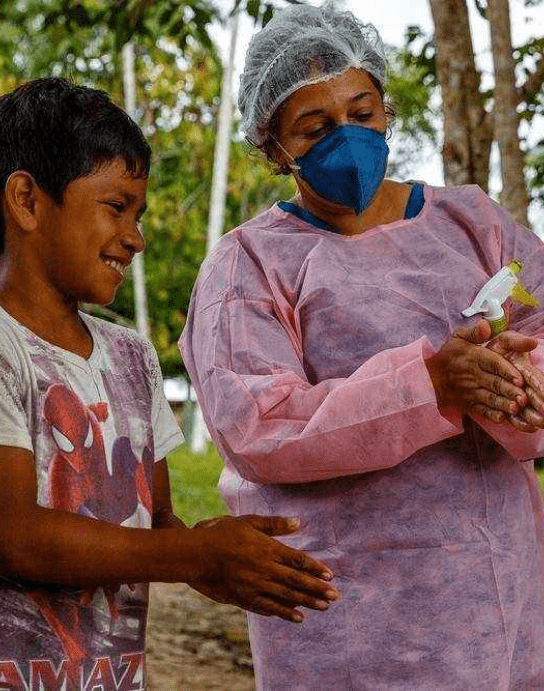
Infection prevention and control measures are essential to prevent Ebola transmission, particularly in health care settings. These measures include the safe and correct use of PPE, safe isolation of patients with suspected cases, rigorous hand hygiene practices, and the safe management of medical waste and instruments. MSF provides training on infection prevention and control at health facilities and provides PPE and other essential supplies.
Water, sanitation, and hygiene teams play a vital role in preventing the spread of the virus by ensuring safe water supply and carrying out cleaning and disinfection activities in health care facilities, ambulances, and patients’ homes. They also work with partners to support safe and dignified burials, preparing bodies to reduce the risk of transmission.
Community engagement is critical to building trust and reducing transmission. MSF works closely with community leaders and local organizations to share accurate information about the disease, address people’s concerns, and advise people on when and how to seek care. Since the start of the outbreak, MSF teams have carried out regular community engagement activities to foster trust and maintain dialogue with affected communities. For example, at the Elikiya Ebola treatment center in Ituri, community leaders are invited each week to visit the facility, ask questions, and engage directly with MSF teams.
Disease surveillance supports the rapid identification of cases to help stop the spread of Ebola. MSF supports disease surveillance efforts through contact tracing, case investigation, alert management, and strengthening lab capacity. MSF’s on-site laboratory at Elikiya Ebola treatment center processes an average of 40 samples each day, delivering results in as little as one hour. Before this laboratory was established, obtaining results could take two to three days.
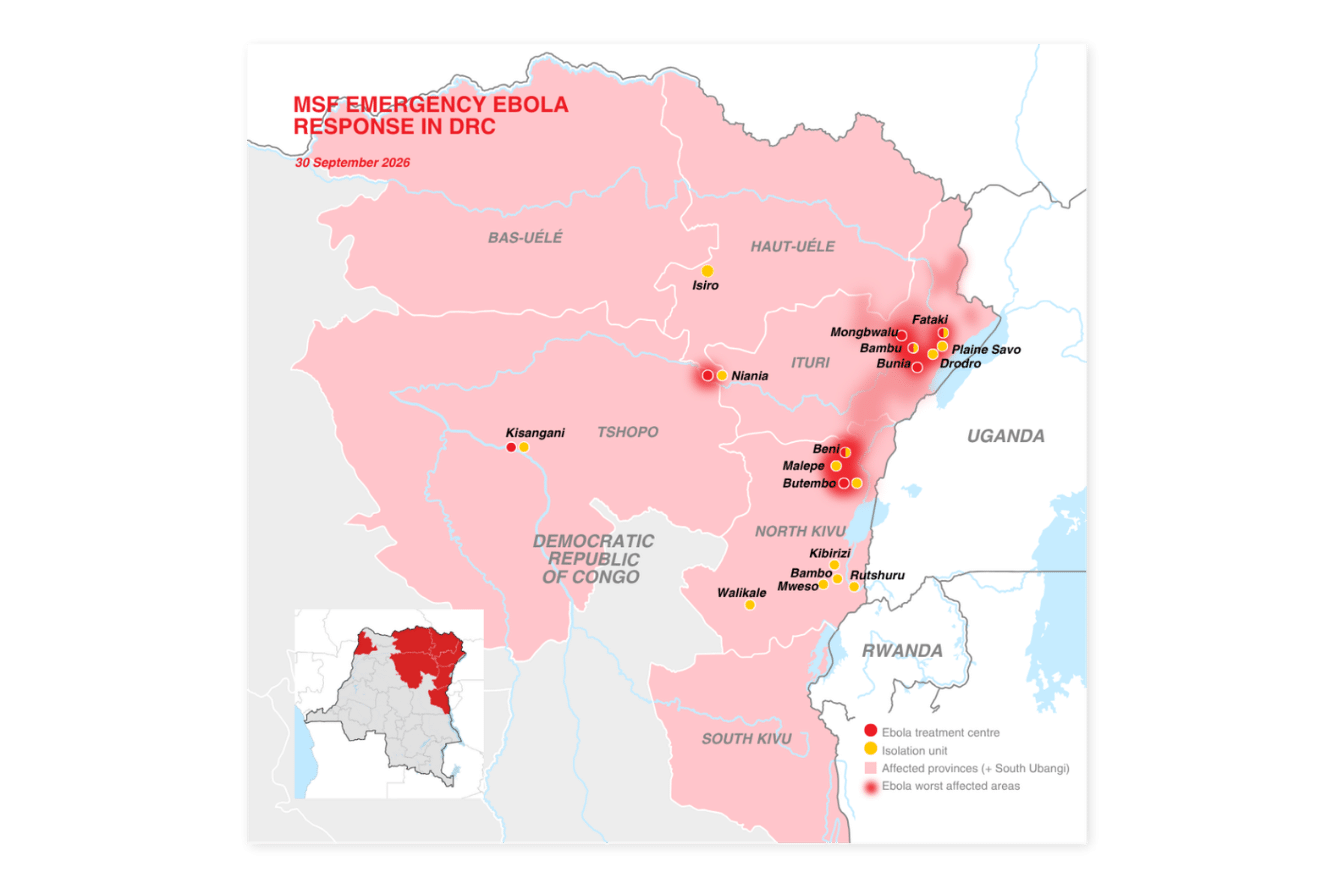
MSF has launched a response in DRC, mobilizing teams of medical, logistical, and support staff with experience working in previous Ebola disease outbreaks. We currently work in five provinces, all in the east of the country, including major hotspots like Ituri and North Kivu provinces.
In addition to our activities in DRC, we rehabilitated a 32-bed Ebola treatment center in Kampala, Uganda, in response to reported cases earlier in the outbreak. We are also working with the Ministry of Health in Kenya following the announcement of the country's first confirmed case in October.
Unlike most Ebola disease outbreaks that have occurred in DRC, this one is caused by the Bundibugyo virus, for which there is currently no approved vaccine or treatment. This is the third detected outbreak involving Bundibugyo, following outbreaks in Uganda in 2007–2008 and in DRC in 2012.
The two monoclonal antibody treatments that were approved following clinical trials conducted in DRC between 2018 and 2020 are specific to the Zaire virus and are not effective or approved for Bundibugyo virus. While there are antiviral drugs and monoclonal antibody candidates for this virus, their efficacy has yet to be proven in clinical trials.
In the absence of targeted treatment, patient care relies primarily on symptom management and support to improve patients’ chances of survival. This involves fluid replacement, oxygen therapy, and monitoring of blood and cardiac parameters.
MSF, along with other medical organizations involved in the outbreak response, is actively supporting the scientific PARTNERS clinical trial, which evaluates the safety and efficacy of the remdesivir and MBP134 therapies for this virus.
This Ebola disease outbreak involves the Bundibugyo virus, for which there are no approved vaccines or specific treatments. This virus is also particularly difficult to diagnose due to limited testing capacity.
The outbreak is taking place in northeastern provinces where decades of conflict and repeated waves of displacement have complicated the identification, follow-up, and isolation of cases. The insecurity, armed checkpoints, and shifting front lines can also slow down the transport of test samples to laboratories and impede access to communities. The terrain — with its mountains, rainforests, and rivers — also makes it difficult to reach communities and distribute supplies.
Timely testing is critical for surveillance, understanding transmission trends, and guiding the response. However, the local health system urgently needs laboratories, diagnostic equipment, and resources to safely conduct these tests. This includes both permanent laboratory infrastructure and context-adapted solutions such as mobile and portable laboratories that can reach remote or underserved communities. Pharmaceutical manufacturers must also urgently scale up the availability of diagnostic tests and other essential tools.
Ebola is not the only health emergency in eastern DRC, and the response to the outbreak cannot come at the expense of other lifesaving health care needs. People should not suffer from preventable or treatable diseases because assistance and attention are redirected elsewhere.
One of the key lessons from previous Ebola disease outbreaks is that maintaining access to routine health care is as important as controlling the outbreak itself. That’s why ensuring safe and continuous access to other essential health care services remains a priority in MSF’s response. Pregnant women still need maternal care, children still need vaccinations, and patients still need treatment for common illnesses.
Malaria, cholera, and measles continue to cause significant illness and death in DRC, while malnutrition, mainly among children, remains a growing concern in several areas where MSF works. Access to sexual and gender-based violence care also remains crucial.

By giving to MSF today, you will be helping to ensure we can respond to emergencies like the Ebola outbreak at a moment's notice.
DonateBetween late 2014 and 2016, an outbreak of Ebola in West Africa became a major international emergency. The severity of the epidemic caused MSF to launch one of the largest emergency operations in our history.
MSF responded in the three most affected countries — Guinea, Sierra Leone, and Liberia — and also to the spread of cases to Nigeria, Senegal, and Mali. At the peak of the epidemic, MSF employed nearly 4,000 national staff and more than 325 international staff who ran Ebola management centers as well as conducted surveillance, contact tracing, health promotion, and provided psychological support.
MSF admitted 10,310 patients to its Ebola management centers, of which 5,201 were confirmed Ebola cases, representing one-third of all WHO-confirmed cases.

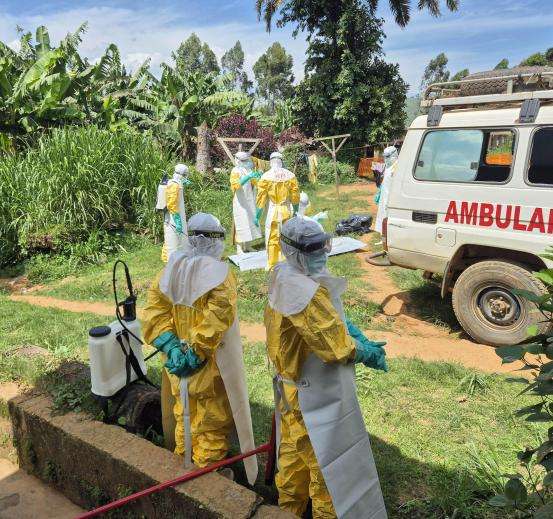
Unlike most previous Ebola disease outbreaks in DRC, the current outbreak is due to the Bundibugyo virus.
October 02 02:54 PM
The province is bearing an increasing share of the Ebola burden in DR Congo, while access to specialized care remains insufficient.
Read more
October 01 01:21 PM
Stopping the spread of Ebola disease requires careful coordination across five key areas.
Read more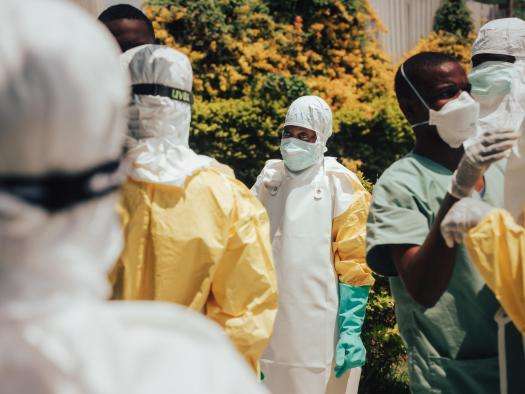
September 25 12:24 PM
Ongoing clinical trials for Bundibugyo Ebola virus therapeutics provide an important opportunity to make successful treatments accessible to all who need them.
Read more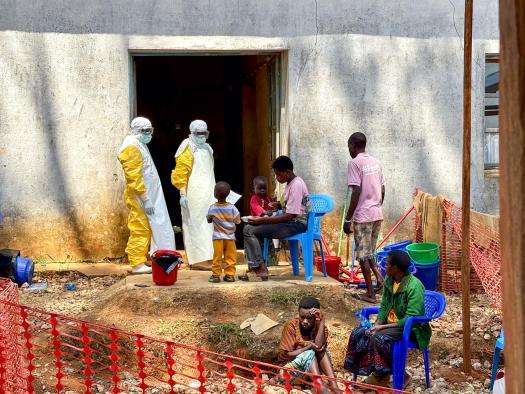
September 19 08:00 AM
The ERVEBO vaccine may offer additional protection to those most exposed and help strengthen the response alongside other essential interventions.
Read more
September 18 09:28 AM
While transmission is slowing in parts of Ituri province, Ebola is spreading into new and less-prepared areas, making containment increasingly difficult.
Read more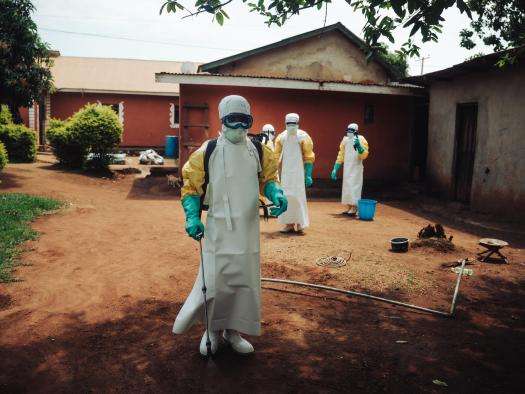
September 01 10:39 AM
In the ongoing Ebola outbreak in DR Congo, children with the disease are at a disproportionately higher risk of dying.
Read more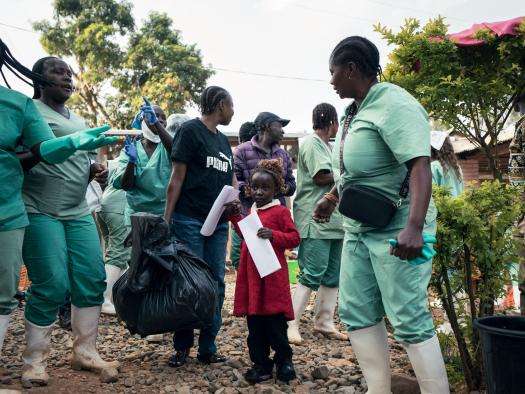
Some humanitarian crises make the headlines—others don’t. Unrestricted support from our donors allows us to mobilize quickly and efficiently to provide lifesaving medical care to the people who need it most, whether those needs are in the spotlight or not. And your donation is 100 percent tax-deductible.